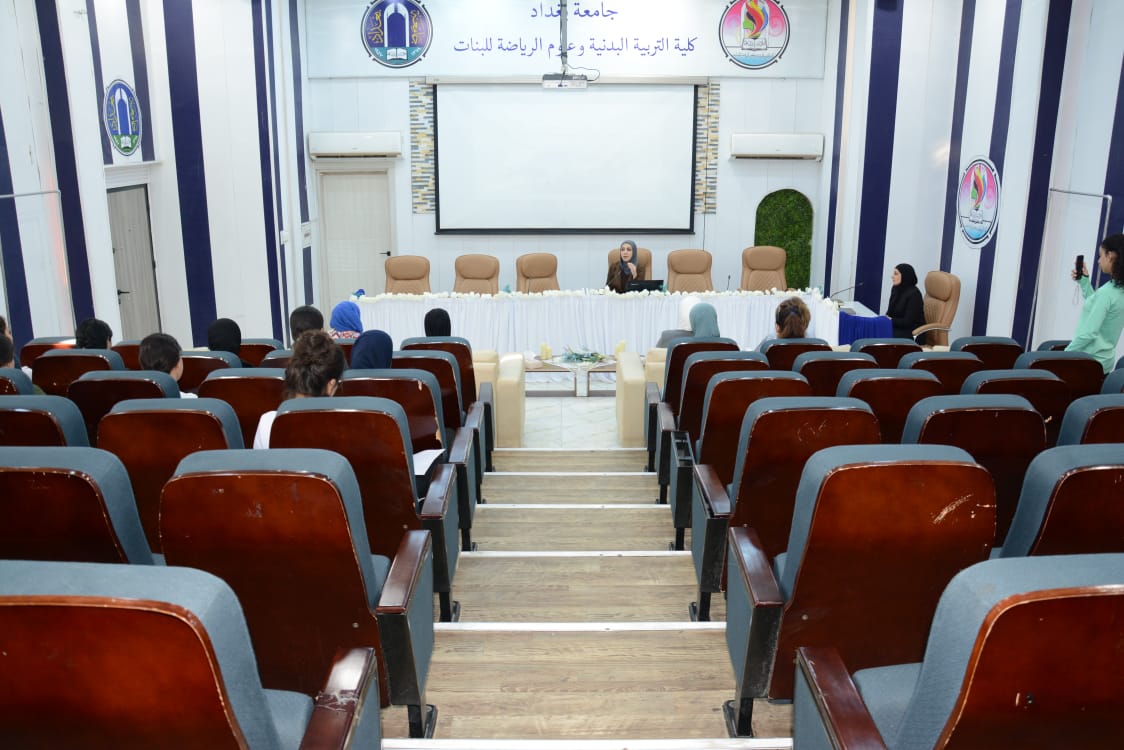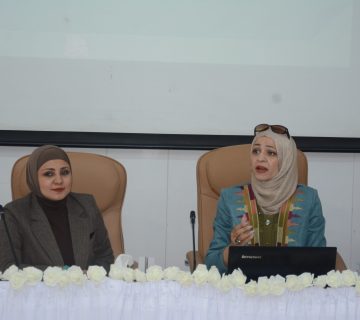

As part of its efforts to promote awareness of mental health issues, the University Psychological Counseling Unit at the College of Physical Education and Sports Sciences for Women / University of Baghdad, and under the patronage of the Dean, Prof. Dr. Fatima Abd Malih, and the supervision of the unit’s head, Dr. Hind Salem Tayeh, hosted Lect. Dr. Zina Saeed Al-Hardan, a faculty member from the College of Arts / Department of Sociology / University of Baghdad, deliver a scientific seminar titled (The Psychological and Social Effects of Human Trafficking on Victims).
The seminar aimed to shed light on the crime of human trafficking, which is considered one of the most dangerous crimes violating human dignity and basic rights, leaving deep and long-term psychological and social effects on its victims.
Dr. Zina highlighted several key psychological and social impacts of this crime, including:
-
Psychological trauma: Victims are exposed to severe trauma due to physical or sexual violence or continuous threats. Symptoms of Post-Traumatic Stress Disorder (PTSD) often appear, such as nightmares, panic attacks, and intrusive memories.
-
Depression and anxiety: Victims frequently experience hopelessness and despair, and many suffer from chronic depression.
-
Loss of identity and dignity: Victims may feel reduced to mere “commodities,” stripped of their humanity and self-worth.
-
Addiction and behavioral disorders: Some victims are forced to use drugs as a means of control, while others may turn to substances to cope with emotional pain.
-
Suicidal tendencies: Due to severe helplessness and despair, some victims attempt self-harm or suicide as an escape from their suffering.
She also discussed the social consequences of human trafficking, such as social isolation, family breakdown, social stigma, poverty and economic marginalization, and loss of trust in institutions, where victims feel abandoned by society.
At the conclusion of the seminar, Dr. Zina emphasized that the impact of human trafficking does not end with rescuing the victim. Its psychological and social consequences require long-term treatment, including specialized trauma therapy, rehabilitation and reintegration programs, and community awareness efforts to reduce stigma and discrimination.
This seminar aligns with several Sustainable Development Goals, including: Goal 3 (Good Health and Well-being), Goal 4 (Quality Education), and Goal 17 (Partnerships for the Goals).
As part of its efforts to promote awareness of mental health issues, the University Psychological Counseling Unit at the College of Physical Education and Sports Sciences for Women / University of Baghdad, and under the patronage of the Dean, Prof. Dr. Fatima Abd Malih, and the supervision of the unit’s head, Dr. Hind Salem Tayeh, hosted Lect. Dr. Zina Saeed Al-Hardan, a faculty member from the College of Arts / Department of Sociology / University of Baghdad, deliver a scientific seminar titled (The Psychological and Social Effects of Human Trafficking on Victims).
The seminar aimed to shed light on the crime of human trafficking, which is considered one of the most dangerous crimes violating human dignity and basic rights, leaving deep and long-term psychological and social effects on its victims.
Dr. Zina highlighted several key psychological and social impacts of this crime, including:
-
Psychological trauma: Victims are exposed to severe trauma due to physical or sexual violence or continuous threats. Symptoms of Post-Traumatic Stress Disorder (PTSD) often appear, such as nightmares, panic attacks, and intrusive memories.
-
Depression and anxiety: Victims frequently experience hopelessness and despair, and many suffer from chronic depression.
-
Loss of identity and dignity: Victims may feel reduced to mere “commodities,” stripped of their humanity and self-worth.
-
Addiction and behavioral disorders: Some victims are forced to use drugs as a means of control, while others may turn to substances to cope with emotional pain.
-
Suicidal tendencies: Due to severe helplessness and despair, some victims attempt self-harm or suicide as an escape from their suffering.
She also discussed the social consequences of human trafficking, such as social isolation, family breakdown, social stigma, poverty and economic marginalization, and loss of trust in institutions, where victims feel abandoned by society.
At the conclusion of the seminar, Dr. Zina emphasized that the impact of human trafficking does not end with rescuing the victim. Its psychological and social consequences require long-term treatment, including specialized trauma therapy, rehabilitation and reintegration programs, and community awareness efforts to reduce stigma and discrimination.
This seminar aligns with several Sustainable Development Goals, including: Goal 3 (Good Health and Well-being), Goal 4 (Quality Education), and Goal 17 (Partnerships for the Goals).